The Outway Story
Built from the ground up and working towards seamless land management

Co-founders Aaron Kennedy and Nico Schweiger open up about the story behind Outway, including the early days, the lessons learned, a few laughs, and where it's headed next.
The Spark: Recognizing the Problem
Q: How did Outway start?
A (Aaron): Outway was not a light bulb moment, but instead earned secrets over years of professional work, both in land management and in software. I carried that as a volunteer Ranger and a naturalist into college. These were challenges of showing up at the wrong parking lot, missing crew members, or waiting around and not knowing what was next. A lot of these details started slipping through the cracks.
Yeah, so there was a problem where land managers didn't have control over data, not just publicly, but within their own jobs. As I moved into the software world and started my career, I worked at two companies and built and ran six products. There, I really got to see the scope of what software can do and some of the different options.
It sounds very weird to say this, but honestly, Shopify was a big kind of connector piece to this in secretly solving for land management. If you're running a storefront, you have to manage your inventory, customers, and returns in the back of house. And oddly, it is remarkably similar in land management. Yes, we have our storefronts, trails, and parks, but there are also all these operational pieces behind the scenes: maintenance, ecology, wildfire management, ranger enforcement, visitor management, and education. All these threads go into making these lands and parks available.
I realized that software can do a really good job of bringing all these things together to make the operation run smoothly. And, you know, I'm not saying Outway is a Shopify for land management; we don't do that, but it does focus on bringing different aspects of operations together in one place to make things seamless. We didn't know right away what that would look like. We knew there was an opportunity because we experienced the problem as recreators and as land managers. But we weren't naive enough to believe we knew exactly what to build.
Research & Validation: Learning from the Field
Q: How did you approach understanding the problem and validating the opportunity for Outway?
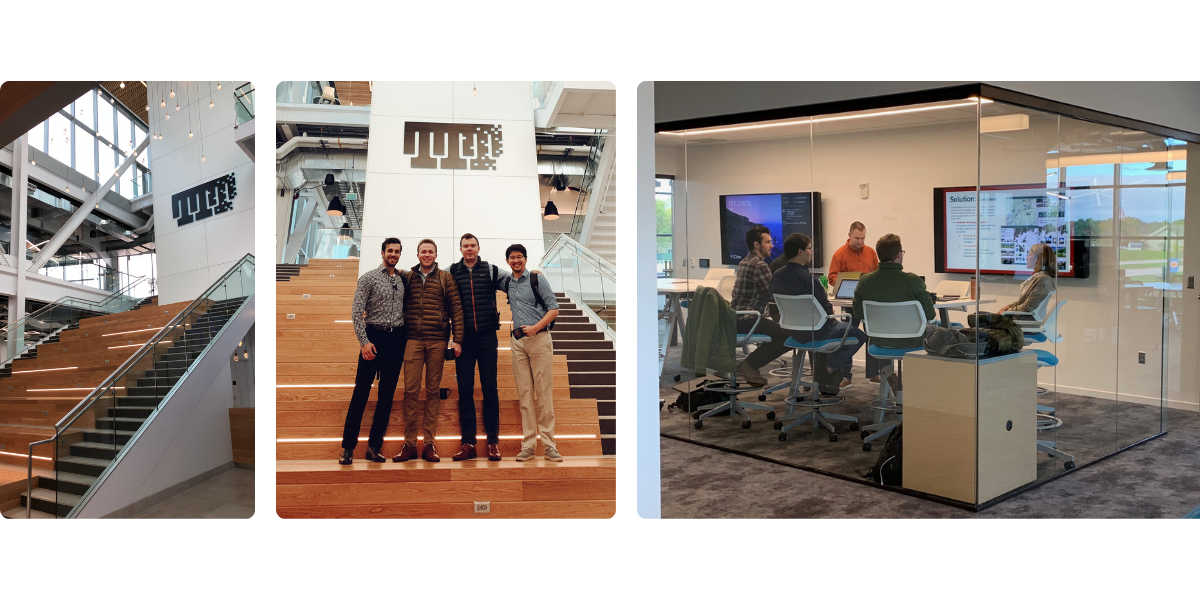
A (Aaron): We really took a research-based approach first. We had an opportunity to go to a startup studio program from Microsoft and the Green Bay Packers in Titletown, Wisconsin, which was a fun five-day stretch where we worked with VCs, called land managers, did interviews, and tried to figure out the business proposition, the need, and how we were going to solve it.
At first, we had a pretty good idea: land managers needed a tool to manage their data and communicate with all the people interacting with them. Initially, the thesis was that land managers needed a way to communicate trails to the public. That is a need, but it turned out to be pretty low on most teams' priority lists. Most teams didn't have tools for any of their work—they were still relying on pen and paper and walkie-talkies, and had no way to control their maps. I could go on about the issues and isolation of maps in the field, but that was really our launch point. It gave us the validation to say, hey, there's a bigger problem to solve here.
Q: How did the idea progress after that initial validation?
A (Aaron): We ended up getting an offer from the studio, but turned it down to focus more on research. After we left, we said, I don't think we have enough to start this business, but we have enough to justify learning. That's when Nico, I, and a handful of others dove into learning more about the space, understanding exactly what to build and what the problems were.
I went to grad school at the University of Washington at that point, peak COVID. At UW, Nico and I studied how to start this business and understand the space by participating in the NSF Innovation Corps Program. This involved researching the public sector, interviewing recreators, and conducting in-depth interviews with approximately 400 people in land management over 18 months. The research focused on understanding human systems of land management, including which tools are effective and which ones are not, as well as the approaches used by major players such as the National Park Service. We learned that almost every team and function is managed in its own tool, or not in software at all; some teams simply use spreadsheets or paper notes.
Q: What were the core problems identified in land management during your research?
A (Aaron): The NSF research concluded that everyone used multiple tools. Nothing allows them to work with partners. Ecosystems don't respect property lines, but stewardship systems do. Siloed data methods, pen, paper, software, spreadsheets, limit collaboration within teams and across agencies, making even Ranger-to-Ranger collaboration difficult.
That isolation became the core problem. We realized that if we could bring these things together in a simple and accessible way, both in the field and in the office, we could create a foundational tool for land management and team operations.
From Prototype to Partners
Q: How did Outway get formally founded and get its first partners?
A (Aaron): This is when Outway got formally founded. We decided to raise money and take a real swing at it. We also locked in the teams at Pitkin County Open Space and the City of Aspen as our initial development partners. That's where the journey began, running prototypes with those agencies.

Q: Was there a particular challenge in land management that made you think, "There has to be a better way"?
A (Aaron): We called it Go Go Ranger—a nickname for the internal tool Pitkin County and Aspen used. Most teams we met didn't have formal tools, so having software at all was a unique feature. That wasn't the platform's official name, but Go Go Ranger felt more fitting. It wasn't a mobile app; it was a web app. It allowed them to track Ranger activity—a spreadsheet with very little geospatial data, no visualization, just base record-keeping.
What was crazy was that Rangers would record incidents in the field, then convert them into a spreadsheet, add them to the platform, and also add them to the city's enforcement database, four to five times a day per contact. The software was vulnerable; an unprotected URL could wipe 13 years of data. Its only protection was that Pitkin and Aspen were the only users.
The Outway Name & Brand
Q: How did you decide on the name Outway?
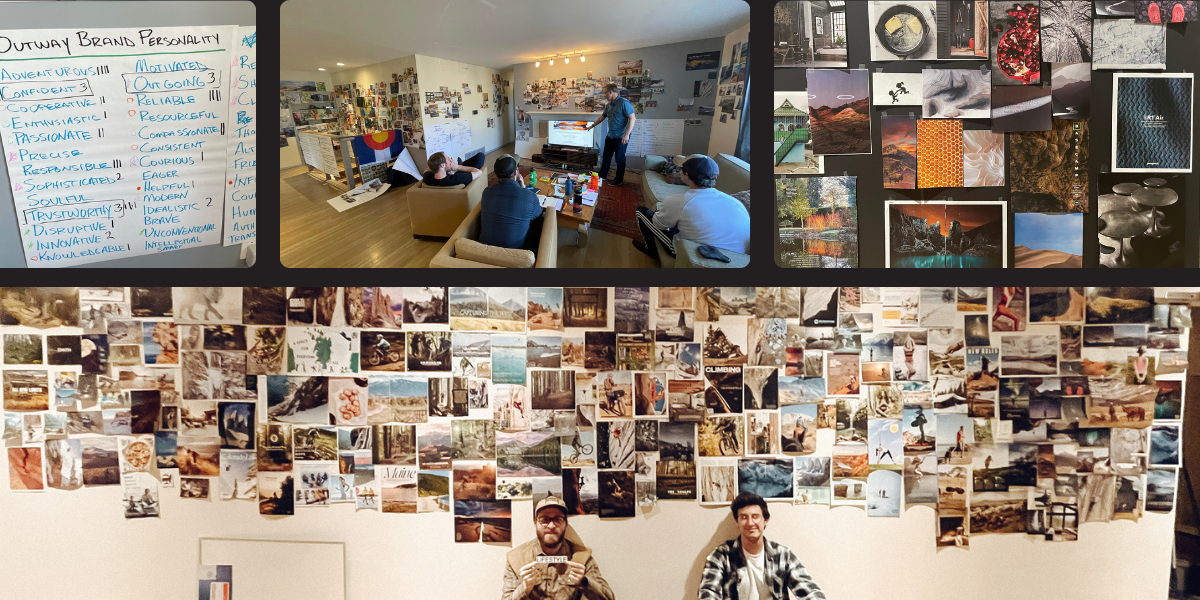
Aaron: During a heatwave in Oregon in the summer of 2019, we wrote down words representing the brand's values of trust, intelligence, and benevolence. We even created a persona: kind, knowledgeable, polished. We wrote out about 230 names, including 17 variations of "Out…" and other ideas like Outdoor Collaborative. It had to fit the brand, ethos, and available trademarks and URLs. We couldn't afford outway.com, and by the time we raised money, a different company had it, so we're outway.io.
Honorable mentions: Accilivity, Livity, Tapio, Quandary, Outrek, Uptrack, Scout, Ranger, Byway

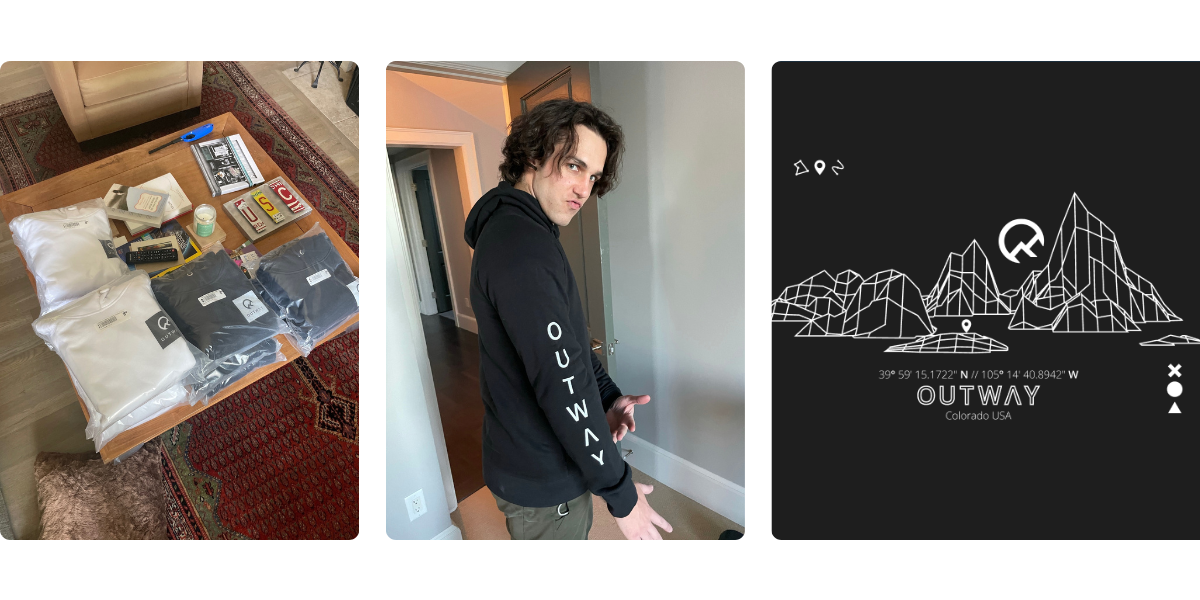
Keeping the Dream Alive: Early Stories
Aaron: We did crazy stuff to keep Outway alive. Nico and I ran a tech consultancy for e-commerce brands, building and managing their entire Shopify, shipping, subscription, and website systems.
Back in 2021, during the AI/blockchain hype, I gave talks to a club of older women about technology. They paid me a couple of hundred dollars, fed me, and I taught blockchain, AI, and even the economics of Pokémon cards. We almost sold all my Pokémon cards—glad we didn't.
Q: How did your experience as a Junior Ranger influence Outway?
A (Aaron): The Junior Ranger piece is where I started, and it's shaped how I approach this work. One thing became really clear: none of it happens in isolation. In the field, everyone, ecology teams, Rangers, and communications, is working on the same land. Everything impacts the trails, the habitat, and the people.
That was a guiding principle for Outway. Breaking down barriers between teams makes the workflow much smoother. For example, if a Ranger spots a mountain lion and needs to close a trail, Outway lets their team communicate immediately across departments, agencies, and the community. No more endless calls or email chains that get lost.
Collaboration has always been central. Making Outway customizable and truly collaborative stems from my experience in land management; it's about giving teams the tools to work together efficiently and safely.
Q: What is the long-term vision or impact you hope Outway will have?
A (Aaron): There's a phrase from the director of Pitkin County: Seamless Land Management. It works well when teams collaborate across partners. The more teams on Outway in a community, the closer we get to seamless land management. In five or ten years, if we can impact even one community, it would look night and day different from land management around the country.
Q: What has been the most rewarding or surprising moment so far with Outway?
A (Nico): Every time we onboard a team and see them active, with tons of icons on the map and using Outway, that's the most rewarding part.
A (Aaron): Similar to that, a client recently clicked the new export/reporting button and said, "Oh, wow," because it replaced weeks of work in seconds. That was a truly powerful moment, seeing the meaningful impact of improving efficiency and resource management.

Q: How do you define success for Outway beyond just revenue?
A (Aaron): For me, Outway has already been successful. We were successful the moment we helped Pitkin County level up operations. Our impact has scaled, saving time and energy while increasing the number of people in the field.
A (Nico): I'd add accessibility, not just keeping areas open, but making stewardship accessible, whether through funding, tools, or staffing. Outway plays a role in that.
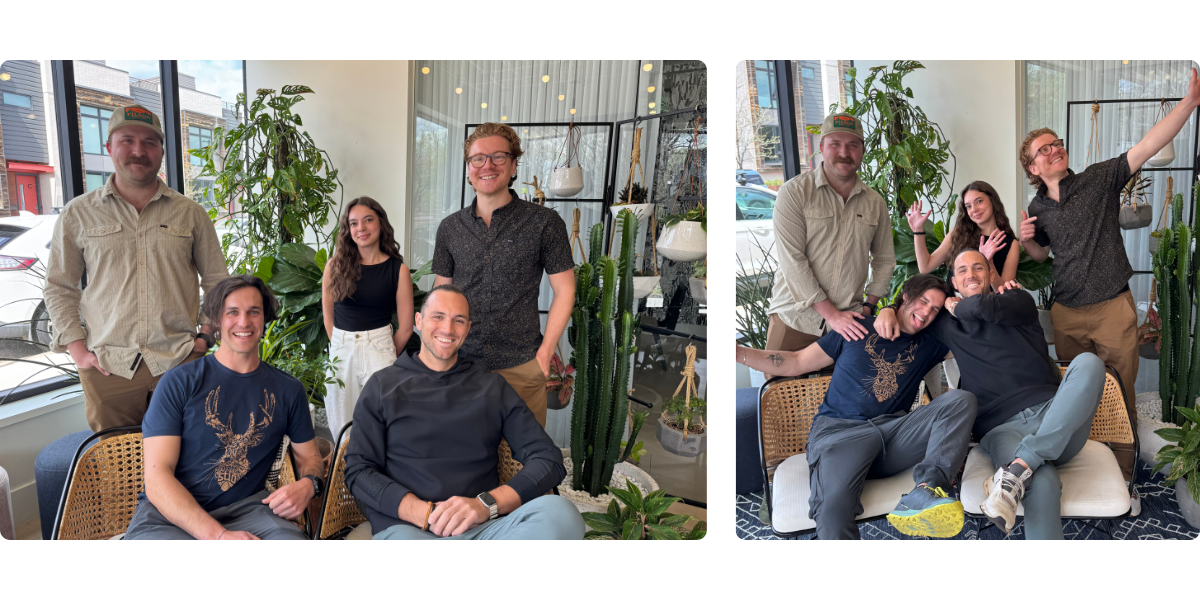
Learn more about our team and us here!